French Press Essentials: Gear & Tips for a Flawless Brew
If you cherish a cup of coffee that’s undeniably rich, full-bodied, and bursting with character, then the French press brewing method is likely your ideal companion. Far from just another coffee maker, the French press offers a hands-on, immersive experience that results in a uniquely flavorful brew. This manual device, characterized by its elegant cylindrical carafe, plunger, and built-in mesh filter, relies on the simple yet powerful principle of total immersion. By steeping coarsely ground coffee in just-boiled water for a precise duration, it extracts the coffee's oils and flavors more gently and thoroughly than many other methods, avoiding the potential bitterness caused by overheated water or coffee "cooking" on a warming plate.
Many casual users might think brewing with a French press is as simple as adding coffee, hot water, plunging, and enjoying. While the basic steps are straightforward, truly mastering the French press for a consistently perfect cup lies in understanding the nuances of the equipment and technique. If you're wondering
how to use a French press to its full potential, this comprehensive guide will walk you through the essential gear and expert tips to elevate your daily ritual into an art form.
The Essential Gear for French Press Perfection
Before diving into the brewing process, assembling the right tools is paramount. Each piece of equipment plays a vital role in ensuring a delicious and consistent result. Forget basic instructions; true coffee aficionados know that the devil—and the deliciousness—is in the details.
1. Filtered Water: The Unsung Hero
It might seem obvious, but the quality of your water significantly impacts your coffee's final taste. As a golden rule, if you wouldn't drink the water plain, don't use it for your coffee. Tap water often contains chlorine, minerals, or other impurities that can introduce off-flavors or odors, masking the delicate notes of your coffee. Opting for
filtered water ensures a clean, neutral base, allowing the true character of your beans to shine through. Think of it as a blank canvas for your coffee's masterpiece.
2. High-Quality Coffee Beans: The Heart of the Brew
The "best" coffee is ultimately a matter of personal preference, but generally, high-quality, freshly roasted coffee beans are non-negotiable for an exceptional cup. For French press brewing, experts often lean towards
medium and dark roast coffee. These roasts tend to have a richer oil content and robust flavor profiles that stand up beautifully to the slower, full-immersion extraction process. When selecting beans, keep an eye out for descriptive keywords like:
* French roast
* Smooth
* Full-bodied
* Smoky
* Chocolate or cocoa notes
* Woody
* Nutty
* Earthy
* Spicy
* Caramel
These terms often indicate a roast profile that will deliver the depth and complexity synonymous with French press coffee. Remember, fresh beans are key, as they retain their aromatic oils and vibrant flavors much better than stale ones.
3. The Indispensable Coffee Grinder: Burr vs. Blade
For the freshest and most flavorful coffee, grinding your beans at home just before brewing is a game-changer. Pre-ground coffee rapidly oxidizes, losing its aroma and flavor over time, and can even absorb unwanted smells if not stored perfectly. While any grinder is better than none, a
burr grinder is the gold standard for French press enthusiasts.
Unlike blade grinders that chop beans inconsistently, a burr grinder crushes them between two abrasive surfaces, producing uniform particle sizes. This consistency is crucial for an even extraction, preventing some particles from being over-extracted (leading to bitterness) and others under-extracted (leading to sourness). For French press, you'll want a
coarse grind – roughly the consistency of sea salt or breadcrumbs. This prevents fine particles from slipping through the mesh filter, resulting in a muddy, gritty cup. A burr grinder allows you to precisely dial in this coarse setting, ensuring a clean and balanced brew every time.
4. Precision Heating: The Kettle & Thermometer
Boiling water to the right temperature is critical. Water that's too hot can scald the coffee, leading to bitterness, while water that's too cool won't extract enough flavor. An electric kettle with temperature control is ideal, allowing you to set the water to the perfect brewing temperature (ideally between 195°F and 205°F or 90°C and 96°C). If you're using a stovetop kettle, an instant-read thermometer is an inexpensive but invaluable tool to accurately gauge the water temperature before pouring. This simple step ensures optimal flavor extraction without damaging the delicate coffee compounds.
5. Accurate Measurement: Scale or Scoop
Consistency is the secret to repeatable deliciousness. While a coffee scoop or measuring spoon can work, using a digital kitchen scale to measure your coffee grounds is the most foolproof method. It eliminates guesswork, ensuring you use the exact same amount of coffee for a given volume of water every single time. This precision allows you to fine-tune your recipe and reliably replicate your favorite brews. For those sticking with a scoop, remember to level the grounds each time for consistency.
Mastering the Brew: A Step-by-Step Guide to Using a French Press
Now that your gear is prepped, let's delve into
how to use a French press to create that perfect cup. We recommend starting with a
1:16 coffee-to-water ratio. This translates to approximately one ounce (about six tablespoons) of coarsely ground coffee for every 16 ounces (two cups) of water.
1.
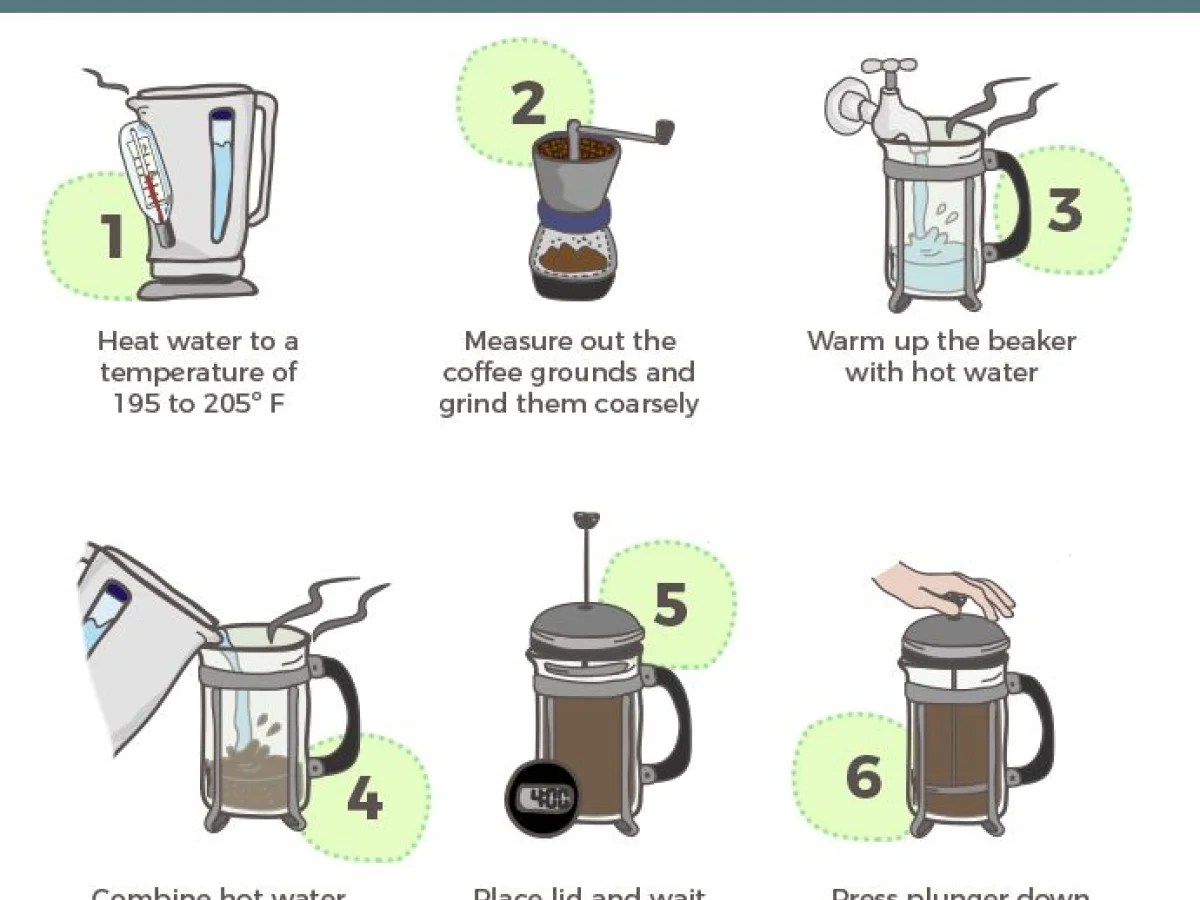
Heat Your Water: Fill your kettle with filtered water and heat it to the ideal temperature of 195°F-205°F (90°C-96°C). If you don't have a temperature-controlled kettle, boil the water and then let it sit for about 30-60 seconds off the heat.
2.
Grind Your Beans: While the water heats, grind your fresh, high-quality coffee beans to a coarse consistency using your burr grinder. Measure out your desired amount based on the 1:16 ratio.
3.
Pre-Warm Your French Press (Optional but Recommended): Pour a small amount of hot water (not boiling) into the carafe, swirl it around, and then discard. This prevents the brewing water from losing heat too quickly when it hits the cold glass.
4.
Add Coffee Grounds: Place your coarsely ground coffee into the bottom of the pre-warmed French press carafe.
5.
Pour Hot Water: Slowly and evenly pour about half of your hot water over the coffee grounds, ensuring all grounds are saturated. You'll notice a "bloom" – the coffee grounds expanding and releasing CO2. This indicates freshness and is a good sign! Let it sit for about 30 seconds.
6.
Stir Gently (Optional): After the bloom, a gentle stir can help ensure all grounds are fully immersed and extract evenly. Avoid vigorous stirring, which can create too many fines.
7.
Add Remaining Water: Pour in the rest of your hot water, ensuring it covers all the grounds.
8.
Steep: Place the lid on top, but do not plunge yet. Allow the coffee to steep for
four minutes. This is the optimal time for extracting a full, rich flavor without over-extraction.
9.
The Plunge: After four minutes, slowly and steadily press the plunger straight down. Apply even pressure and don't force it. The plunger should descend smoothly. If it's too difficult, your grind might be too fine; if it's too easy, it might be too coarse.
10.
Serve Immediately: As soon as you've plunged, pour all the coffee into your waiting mug(s). Do not let the coffee sit in the French press with the grounds, as it will continue to extract and become bitter. If you can't drink it all at once, transfer it to a separate serving carafe.
For an even more detailed walkthrough and visual guidance, be sure to check out our article
Master Your French Press: Step-by-Step for Perfect Coffee.
Tips for an Even Better French Press Experience
Beyond the basic steps, these insights can help you refine your technique and truly appreciate why French press coffee is so beloved. If you're looking to
Unlock Rich Flavor: Why French Press Coffee is Superior, these tips are for you:
*
Experiment with Ratios & Grind: The 1:16 ratio is a great starting point, but don't be afraid to adjust slightly to find your personal preference. A slightly stronger brew might call for a 1:15 ratio, while a lighter one could be 1:17. Similarly, a slightly coarser or finer grind can significantly alter the taste.
*
Cleanliness is Next to Godliness: Always clean your French press immediately after use. Leftover coffee oils can go rancid and impart off-flavors to your next brew. Disassemble the plunger and rinse all components thoroughly. A brush can help remove stubborn grounds from the mesh filter.
*
Consider a "Double Filter": Some French press users swear by adding a paper filter (like an AeroPress filter) to the bottom of the mesh plunger. This can catch even more fine particles, resulting in an even cleaner cup.
*
Stirring Technique: While a gentle stir after the bloom is good, avoid excessive stirring during the steep time. This can agitate the fines and lead to a cloudy brew.
*
Embrace the Sediments: A hallmark of French press coffee is the presence of some fine sediments at the bottom of the cup. This contributes to its characteristic full-bodied texture. Don't be alarmed; it's part of the experience!
Conclusion
The French press is more than just a coffee maker; it's a testament to the beauty of simplicity and the power of immersion brewing. By understanding the importance of quality gear, precise measurements, and a few key techniques, you can confidently answer the question of
how to use a French press and consistently craft a cup of coffee that is rich, flavorful, and deeply satisfying. So, gather your essentials, follow these steps, and prepare to embark on a journey of robust flavor and aromatic bliss, one perfect French press brew at a time.