Master Your French Press: Step-by-Step for Perfect Coffee
The French press, with its elegant simplicity and ability to consistently deliver a rich, full-bodied cup of coffee, has long been a favorite among connoisseurs. If you appreciate coffee that’s bursting with flavor, deep character, and a luxurious mouthfeel, then mastering this manual brewing method is a game-changer. Forget watery, bland drip coffee or bitter, over-extracted brews; learning
how to use a French press correctly unlocks a world of aromatic pleasure. This comprehensive guide will walk you through every detail, from selecting the right gear to perfecting your technique, ensuring every sip is an experience to savor.
Why Choose a French Press for Your Daily Brew?
At its heart, the French press is about immersion brewing. Unlike drip machines where water passes quickly through a bed of coffee grounds, a French press allows coffee to steep fully in hot water for an extended period. This gentle steeping process, typically around four minutes, ensures a more complete extraction of oils, flavors, and aromatics from the coffee beans. The result is a coffee that is intensely flavorful, remarkably smooth, and showcases the true character of your chosen beans.
One of the key advantages of this method is the absence of paper filters, which can strip away some of coffee's delicate oils and finer particles, leading to a thinner brew. The French press's built-in mesh filter allows these beneficial elements to pass through, contributing to the signature full-bodied texture. Furthermore, your coffee never sits on a hot plate, preventing the "cooking" effect that often leads to bitterness in other brewing methods. For a deeper dive into why this method stands out, explore
Unlock Rich Flavor: Why French Press Coffee is Superior.
Essential Gear for French Press Perfection
While the French press itself is a simple device, the quality of your supporting equipment significantly impacts the final taste of your coffee. The "devil is in the details" definitely applies here, and investing in a few key items will transform your brewing journey.
- The French Press Itself: These consist of a cylindrical carafe (glass, stainless steel, or ceramic), a plunger with a mesh filter screen, and a lid. Sizes vary, so choose one that suits your daily consumption.
- Filtered Water: Coffee is 98% water, so its quality is paramount. Tap water, often containing chlorine, minerals, or other impurities, can negatively affect the taste. Always use water you would enjoy drinking – filtered water is ideal as it's free of odors and undesirable flavors.
- High-Quality, Freshly Roasted Coffee Beans: The foundation of any great cup. Look for specialty coffee beans that have been roasted recently (check for a roast date, not just a "best by" date). Medium to dark roasts often excel in a French press, as their robust flavors stand up beautifully to the immersion brewing method. Keywords to look for in bean descriptions include full-bodied, smooth, chocolate, nutty, caramel, smoky, or earthy.
- Coffee Grinder (Ideally a Burr Grinder): This is arguably the most crucial piece of equipment. Pre-ground coffee rapidly loses its flavor due to oxidation and can absorb ambient smells. For French press, you need a coarse, consistent grind – think sea salt or breadcrumbs. A burr grinder ensures uniform particle size, which is essential for even extraction. Blade grinders, conversely, chop beans unevenly, leading to a mix of fine dust and large chunks, resulting in an inconsistent and often bitter brew.
- Kettle (Electric or Stovetop): For heating your water. An electric kettle with temperature control is a fantastic investment, allowing you to hit the precise ideal temperature (around 195-205°F or 90-96°C) every time. If using a stovetop kettle, an instant-read thermometer can help you gauge the temperature accurately, as boiling water (212°F/100°C) is too hot and can scald your coffee.
- Coffee Scale and/or Scoop: Consistency is key to repeatable deliciousness. While a scoop can work, a digital kitchen scale is the most accurate way to measure your coffee grounds. Measuring by weight (grams) ensures you maintain the perfect coffee-to-water ratio every time, eliminating guesswork. A common starting ratio for French press is 1:15 or 1:16 (1 gram of coffee to 15 or 16 grams of water).
- Timer: A simple kitchen timer or even your phone's timer is essential for precise steeping.
For more detailed insights on optimizing your setup, check out
French Press Essentials: Gear & Tips for a Flawless Brew.
Step-by-Step Guide: How to Use a French Press for Impeccable Coffee
Now that you have your gear ready, let's dive into the simple yet nuanced steps to brew the perfect French press coffee.
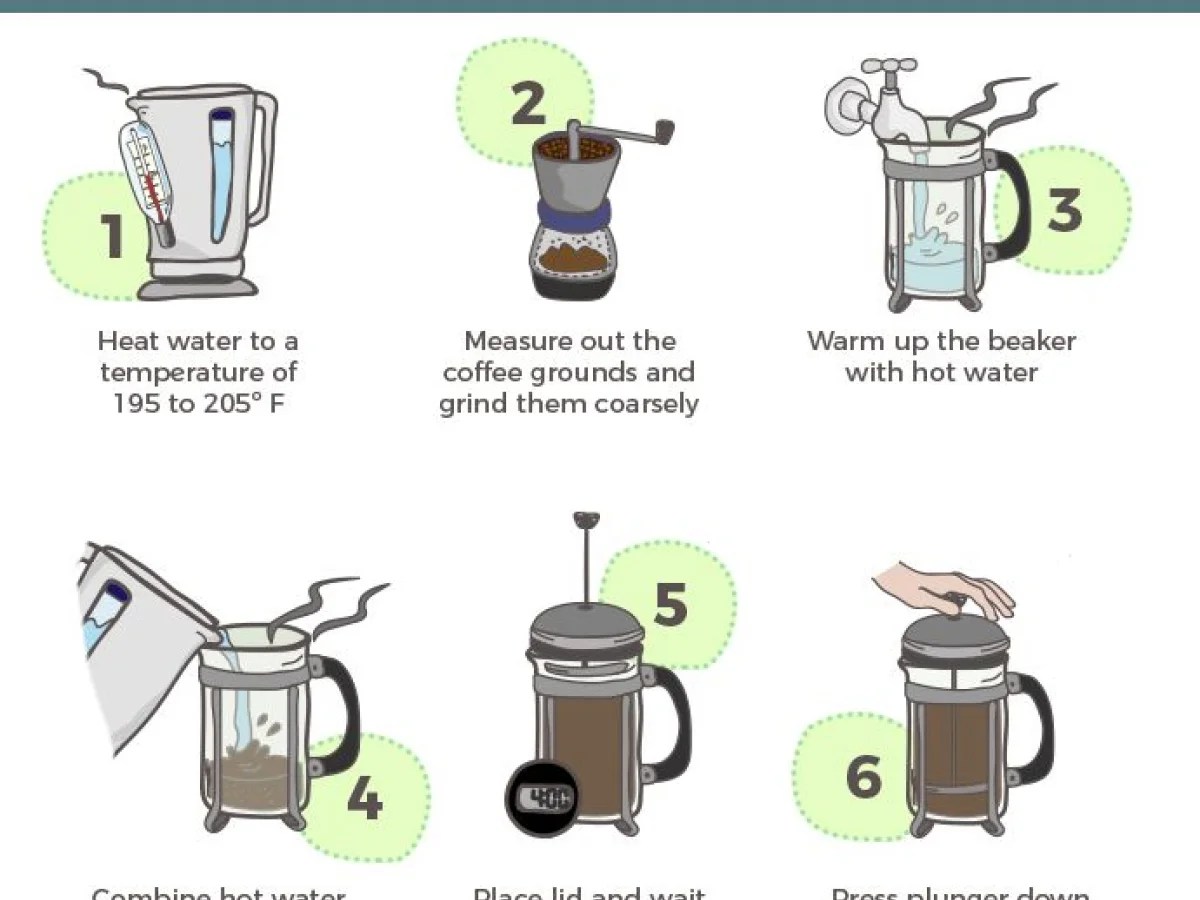
- Pre-heat Your Press: Just like pre-warming a teacup, pouring hot water into a cold carafe can significantly drop the water temperature, affecting extraction. Boil extra water and pour a small amount into the empty French press, swirl it around, then discard. This brings the carafe up to temperature.
- Measure and Grind Your Coffee: Using your scale, measure out your whole beans. For a standard 1:15 ratio, if you want 300ml of coffee, you'll need 20 grams of beans (300/15=20). Grind them coarsely – consistency is paramount here. The particles should be roughly the size of coarse sea salt.
- Add Coffee to Carafe: Spoon your freshly ground coffee into the pre-heated French press carafe. Ensure the grounds are evenly distributed at the bottom.
- Heat Water to Perfection: Heat your filtered water to the ideal temperature range of 195-205°F (90-96°C). If your kettle doesn't have temperature control, bring water to a boil, then let it sit for about 30-60 seconds off the heat before pouring. This allows the temperature to drop slightly from boiling, preventing scorching of the coffee.
- First Pour (The Bloom): Pour just enough hot water over the grounds to saturate them completely – usually twice the weight of the coffee (e.g., 40ml for 20g of coffee). Give it a gentle stir. This initial pour allows the coffee to "bloom" or degas, releasing trapped carbon dioxide. This process is crucial for even extraction and better flavor. Let it sit for 30 seconds.
- Second Pour & Steep: After the bloom, pour the remaining hot water into the carafe, ensuring all grounds are submerged. Avoid pouring too quickly, which can agitate the grounds excessively. Place the lid on top, with the plunger raised above the water. Set your timer for 4 minutes.
- The Plunge: Once the timer goes off, slowly and steadily press the plunger down. Use consistent, gentle pressure. This should take about 20-30 seconds. If it plunges too easily, your grind might be too coarse; if it's very difficult, it might be too fine.
- Serve Immediately: As soon as the plunger reaches the bottom, pour all the coffee into your waiting mug(s). Do not let the coffee sit in the French press with the grounds, as it will continue to extract and become bitter and over-extracted. If you're not drinking it all at once, decant it into another pre-heated vessel.
Advanced Tips for Elevating Your French Press Experience
Beyond the basic steps of
how to use a French press, a few refined techniques can truly set your coffee apart.
- Experiment with Ratios: While 1:15 or 1:16 is a great starting point, different beans and personal preferences might call for slight adjustments. Try a 1:14 ratio for a bolder cup or 1:17 for something lighter.
- The "Clean Cup" Method (or Two-Spoon Method): Some baristas swear by stirring the "crust" of grounds that forms on top after steeping. After your 4-minute steep, gently break the crust with a spoon and skim off any remaining foam or "fines" (tiny coffee particles) floating on top. This can lead to a cleaner cup with less sediment.
- Double Filtration: If you find too much sediment in your cup, consider pouring the coffee through a fine mesh strainer (like a tea strainer) into your mug after plunging. This can significantly reduce "sludge."
- Consider a Wooden Stirrer: Metal spoons can scratch glass carafes over time. A wooden or silicone stirrer is a gentler alternative.
- Proper Cleaning: Always clean your French press immediately after use. Discard grounds, rinse thoroughly, and disassemble the plunger for a good scrub. Coffee oils can build up and become rancid, imparting off-flavors to subsequent brews.
Learning
how to use a French press is more than just brewing coffee; it's an immersive ritual that connects you directly with the process, allowing for unparalleled control and a truly personalized cup. With patience, practice, and the right tools, you'll consistently create rich, satisfying coffee that elevates your daily routine. Experiment with different beans, grind sizes, and steeping times to discover your perfect brew. Enjoy the journey to a richer, more flavorful coffee experience!